The gladdest moment in human life is a departure into unknown lands.
Sir Richard Burton
From the 1st October I will be acting as a Language Assistant through the British Council at two schools based in Avilés, a small town in the region of Asturias in the North of Spain. I will post on this blog as regularly as possible to detail my personal experiences and what advice I would give to others who are considering becoming a language assistant or spending their year abroad in Asturias.
As I am certain is the case for everyone who has done their year abroad this year, the current out break of the Coronavirus has presented some unique challenges. Fortunately for me, my schools were immensely helpful and supportive.
I was advised by my university to return home to the UK, however I decided to stay in Spain for several reasons. Firstly, I did not want to risk contributing to the spread of the virus by travelling between countries, especially because Spain was hit noticeably harder than most countries. Secondly, I did not want to risk having physical contact with older members of my family who are more vulnerable. And thirdly, I have two flatmates who also decided to stay, and I felt like it would be best for us to stay and support each other. Of course, it was also worth bearing in mind that abandoning my year abroad early would influence my Erasmus Grant.
Rest assured, it has been a unique and at times very daunting situation to be in a foreign country during these times, but I do not at all regret my decision. One of the things that frustrated me the most was that our flat does not have a balcony, therefore when we were in the full lockdown which meant that we were not allowed to leave the flat for any reason other than to go to the supermarket at the end of the street or take out the rubbish, it was impossible to get any sunlight. I asked my mum to send me some vitamin D tablets to combat this.
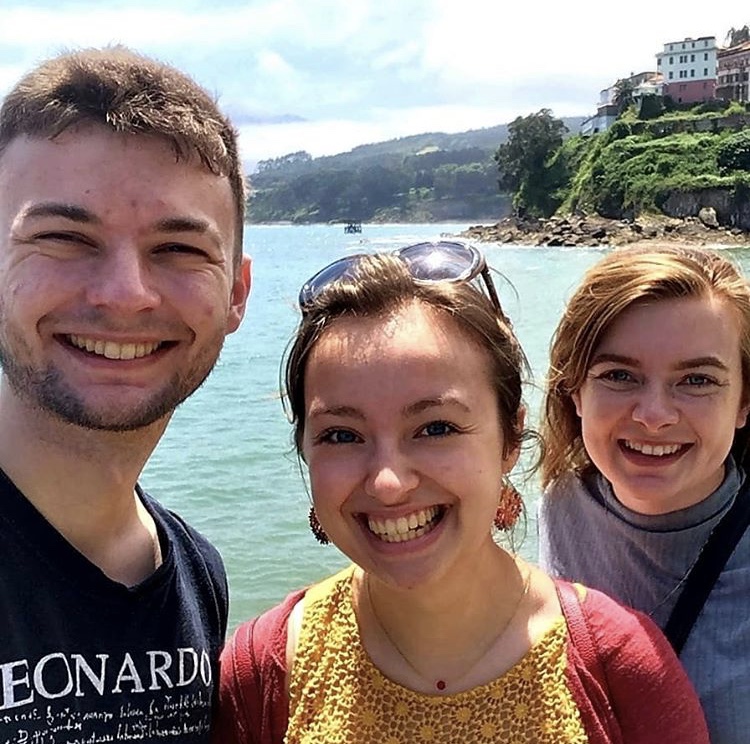
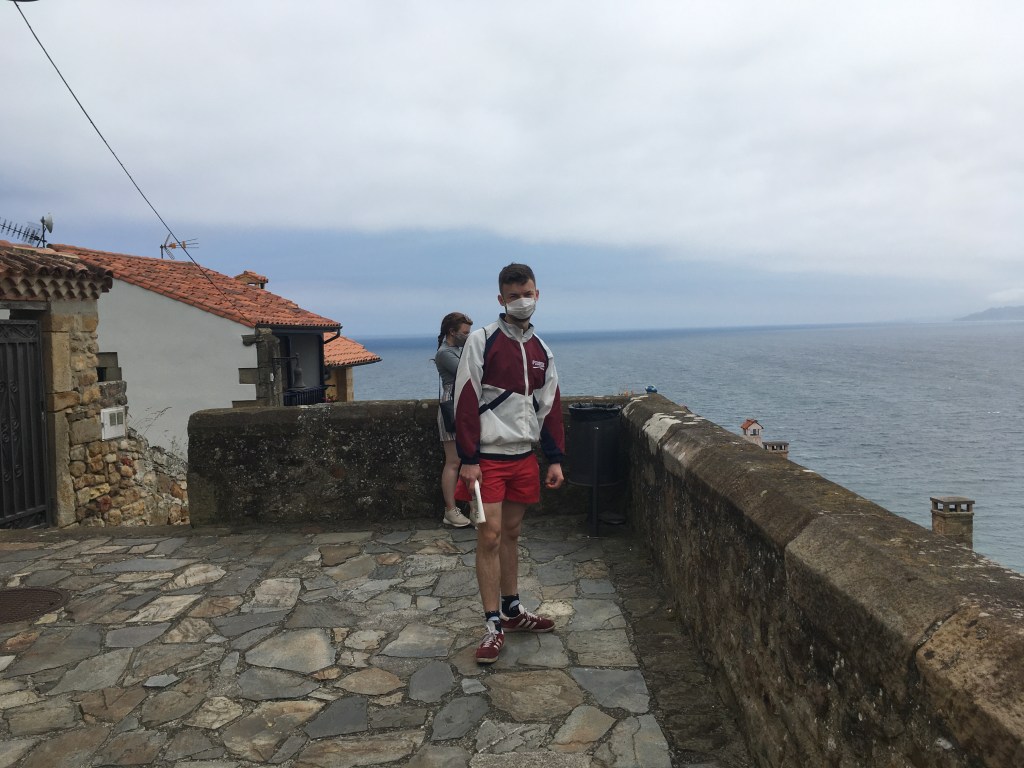
Slowly but surely, the restrictions were lifted and now I am pleased to say that life here has in many ways returned to normal with bars and cafés now reopened and people able to travel across Spain. Just recently my friends and I travelled to a nearby town called ‘Lastres’ because it was the filming location for a popular series called ‘Doctor Mateo’. We took some photos and had a ‘Menu del día’ before resting on the beach.
It was very sad for me to not be able to say goodbye to the students in person, however I was grateful to receive a certificate and some very nice comments from my tutors in my ‘After the Mobility’ reports. For the last few weeks, I have been doing lessons online through Microsoft Teams. I am immensely proud of myself for the way that I have managed with this, I feel as though I adapted to it very well and had some lessons that were fun and interesting.
I will for sure miss my students and I hope that I have helped them with their English.
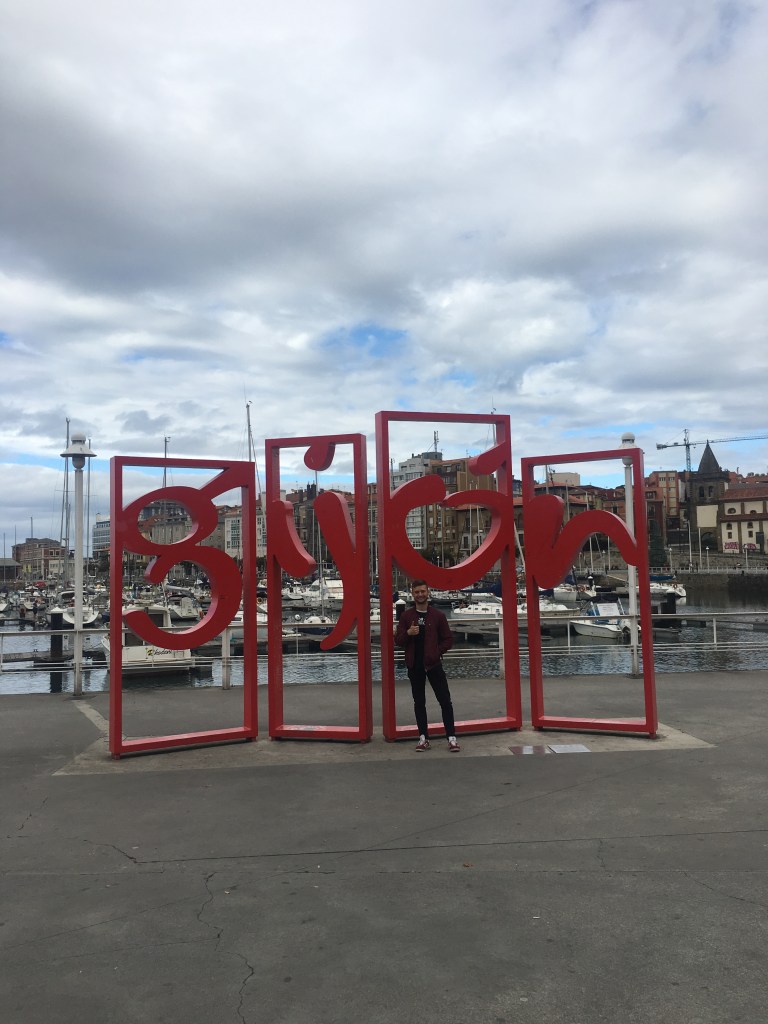
I will miss Gijón and the friends I have made here very much but I am looking forward to returning home to be reunited with my friends and family, whom I have not seen in many months.
In terms of my social life here, a lot of it consists of events and activities within the Erasmus Student Network. If you like the ‘ERASMUS OVIEDO 2019-2020’ page on Facebook, you will find a lot of events where you can meet people from all over the world who have come to Asturias on a placement on to study. My favourite weekly activities are the five-a-side football and Thursday tapas nights.
Over the last few months, I have visited many bars and restaurants here in Gijón as well as other places around Asturias, so I thought I would highlight some of my favourite places:
La Buena Vida – Gijón: This is a bar/nightclub just across the street from us that we often go to on Thursday nights. It’s a really fun place to drink Tinto de Verano and dance to ‘reggaetón’.
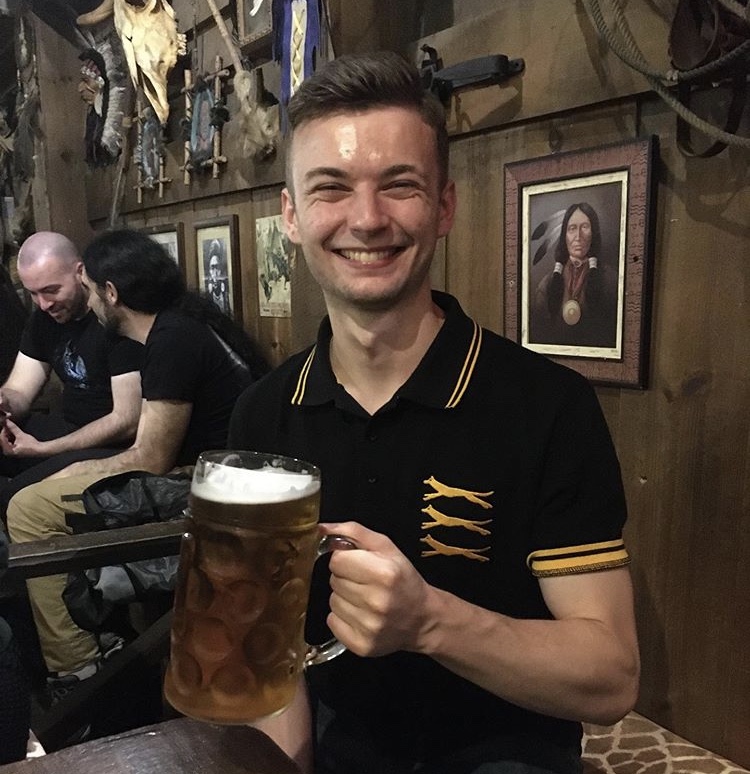
Indian Café – Gijón: A Native-American themed pub, they have varying sizes of beer; from ‘caña’ to ‘cañon’ to the almighty ‘cachi’, reminiscent of a stein that you might get from ‘Bierkeller’ which I have included a picture of.
La Fragua – Gijón: My favourite pub in Gijón, they have four TV screens that show live sport. I’ve been many times to watch the Rugby World Cup final and many Premier league games. If there’s a sporting event you want to watch, they’ve got it.
Morrisons – Gijón: A bar with many selections of beer.
Los Dos Hermanos – Gijón: An ice cream shop near the beach.
Lanna – Gijón: A club that specialises in House and Techno.
Blue Café – Gijón: A café with lots of nice cakes.
Gascona: el bulevar de la sidra – Oviedo: This famous Street in the centre of Oviedo has a number of great ‘Siderías’.
I’ve mentioned in a previous post what some of my best tips are for being a language assistant but now that I’ve been in the role for slightly longer, I thought it would be a good idea to go into more detail and look into what I’ve learnt since then.
It’s important to learn as many of the children’s names as possible because I find that they will rarely volunteer themselves to answer a question or engage in an activity and so you need to pic on them at least every so often. By far the most important thing is get them to speak for as much as possible because that is in effect what you are there to do so it’s always worth considering that when making your lesson plan. For example one of my most successful lessons has been the ‘Design your own reality TV show’ lesson, where I put the students into groups and ask them to come up with an idea for a reality TV show and then come up to the front and explain it to the rest of the class. It is best to avoid ‘handouts’ and other written work as much as possible.
The resources I use the most are Cbbc Newsround and the British Council Learn English sites. A lot of the time, particularly with the primary school children, I will introduce a topic, such as Superheroes, with a short video before asking them to give me words and ideas that they associate with that topic. The British Council Learn English website tends to provide me with such content whilst I use Cbbc Newsround for fun or interesting articles. It’s also a good idea to make a powerpoint, I find it makes it easier to visualise the structure of the lesson and gives it continuity.
Of course, it is always a good idea to ask your tutor or the teachers that you are working with for advice, different schools or different teachers may want different things from you. Different children learn in different ways and different classrooms can have different dynamics so that is also worth bearing in mind.
What a year it’s been so far! I’ve been very busy.
My work as a language assistant in Avilés has been somewhat demanding, I have only been working there for 12 hours a week but in terms of preparation, I have had to spend many hours each week coming up with ideas for each lesson and preparing a lesson plan accordingly. I will usually choose a theme for the lesson such as ‘Burns’ Night’ or ‘Shakespeare’. I have found that the resources on the British Council website’s ‘Learn English’ section have been particularly helpful. I quite like to have a lesson theme that is related to something that is happening in the UK currently that the students are likely not aware of, something such as Burns’ Night. It is also worth bearing in mind that festivals such as Halloween or St Patricks Day are not celebrated in quite the same way in Spain.
Some of my favourite activities to do with my students have been the ‘writing your own Valentine’s Day card’ and ‘designing your own reality TV show’, I have found that the students particularly enjoy the opportunity to be creative and they enjoy sharing their ideas with each other.
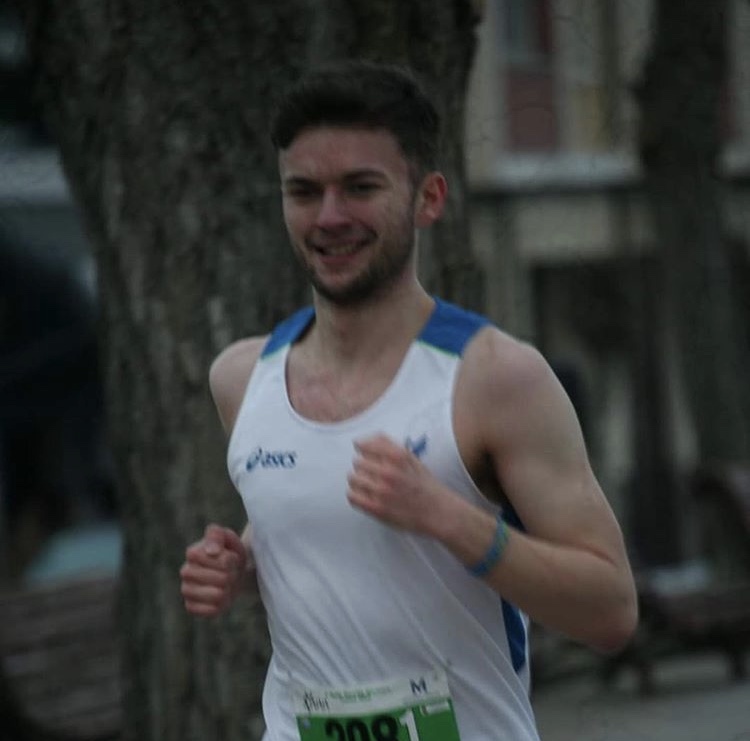
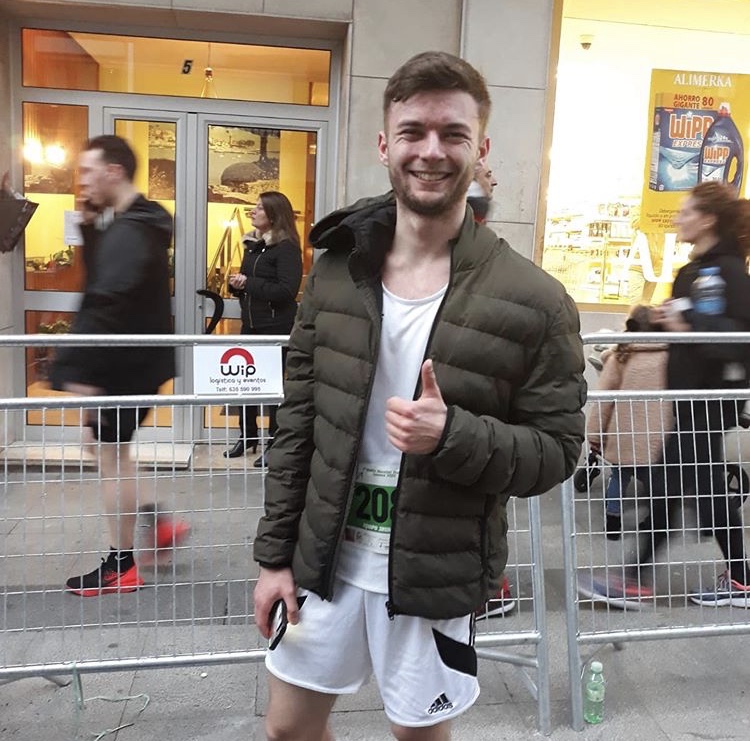
As I’ve mentioned before, one of my schools is fortunately very close to the ALSA bus station in Avilés, however the other is situated in Los Campos for which I have to take the train after the bus meaning my commute is an hour each way. If I’m early enough in the mornings I like to stop at the café for a ‘café con leche’ and a ‘pincho’, which is a small sandwich. At school, breaktimes are a great opportunity to practice Spanish with the teachers whilst having a coffee. It was during a lunch break in the staff room that my met my friend Alba who also lived in Gijón. I offered to give her English lessons and she introduced me to her running group, which has been another great opportunity to meet and have conversations with local Spanish people. I even took part in a relay race in a competition in the nearby town of Luanco.
Generally speaking with regards to language acquisition, I would say that it’s important to be persistent and patient. When I first arrived, I found it very difficult to talk to people due to a combination of my new surroundings and the speed at which the local people tend to speak. I think that Asturias in particular is very challenging due to the particularly small number of foreigners that come here and although it can at times be frustrating, the important thing is to stay dedicated and not to give up on yourself.
I was very much pleased with the accommodation. I was fortunate in that I had got in contact with the other language assistants that were based in Asturias and we formed a group chat on Facebook where I managed to find two other assistants who were looking for a flat in Gijón. We found a three bedroom flat in an ideal location just around the corner the ‘Playa de Poniente’, one of the three beaches of Gijón, along with Playa de San Lorenzo and Playa del Arbeyal. Just a short walk away is also the ‘Elogio del Horizonte’, a famous landmark of Gijón. In terms of price, we pay 800 euros a month between the three of us plus bills and utilities.
I thought that it would be a better idea to live in Gijón as opposed to in Avilés itself because Gijón is a bigger city with more things to do and more fellow Erasmus students.
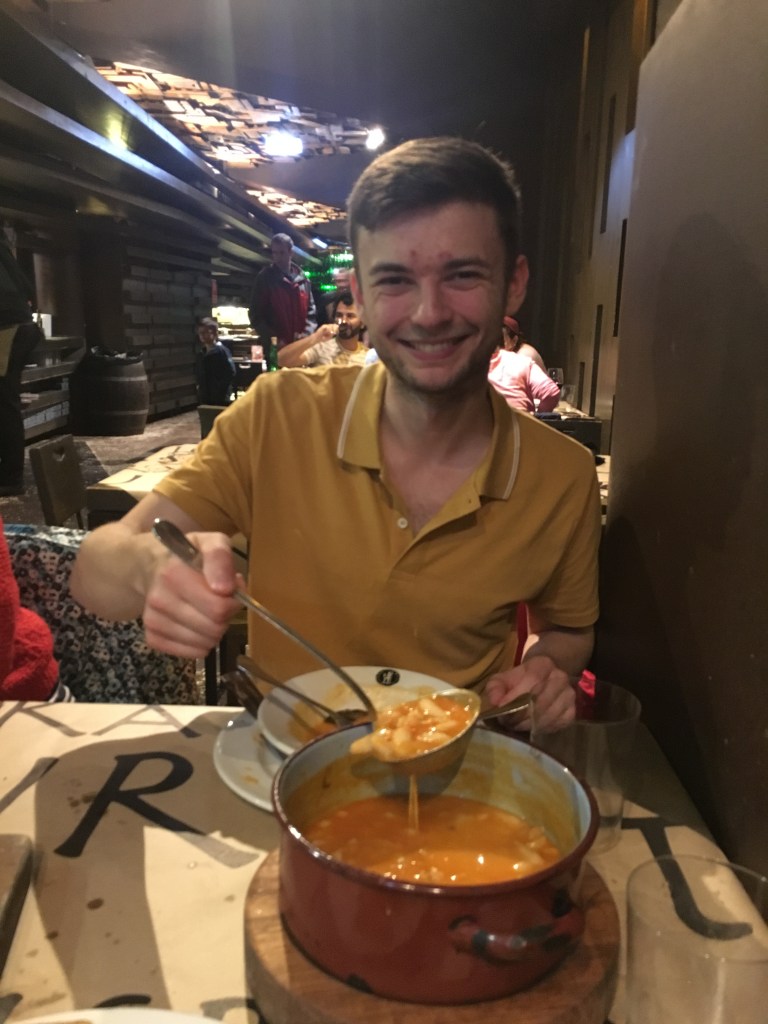
Since arriving, my flatmates and I have sought out some of the famous traditional cuisine of Asturias such as Fabada, Cachopo and Sidra. We have visited ‘Tierra Astur’ which is a chain of restaurants in Asturias where they serve traditional Asturian food, however the portions are very large so it is advisable to share them. My flatmates, Elisa and Rachel, and I get on very well.
On arrival, we had to obtain a NIE, which is a number from the government which is needed to open a Spanish bank account for the monthly wages to be deposited into. I decided to go for ‘Liberbank’, who offer a ‘Cuenta Corriente Max Joven’. We also had to attend an induction day in Oviedo, where we given some tips about the teaching aspect and how to make the most of our time here. It was nice to meet the other language assistants that I had spoken to previously over Facebook.
On Mondays and Tuesdays, I work in a secondary in Los Campos called ‘IES Corvera’ and on Wednesdays and Thursdays in a primary school called ‘Colegio Santo Angel De La Guarda’. In terms of transport, I get an ALSA bus every morning which arrives into the centre of Avilés, followed by a renfe train over to Los Campos. For me personally, I think it is worth getting a ‘Abono Joven CTA’, which is a card that you can top up from €37 a month that lets you have unlimited travel on public transport between a certain number of ‘zones’.
The flat did not come with internet included so we had to purchase a WiFi router ourselves but fortunately when we went to the Vodafone store they gave us a discounted rate of just 30 euros a month because I am a student.
 Callum En Asturias